Montessori For Children
  • Home
  • Curriculum
  • Admissions
  • Testimonials
  • Contact

Classrooms and Curriculum

Classrooms

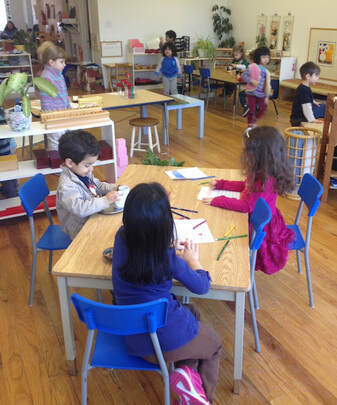
Our classrooms are bright and airy and have a full range of inviting Montessori materials. 
​
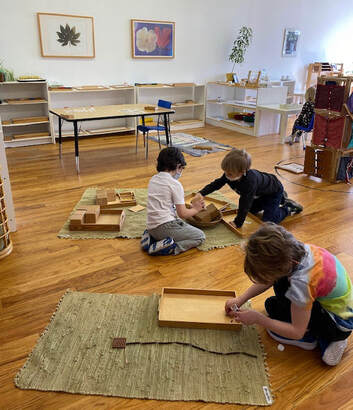
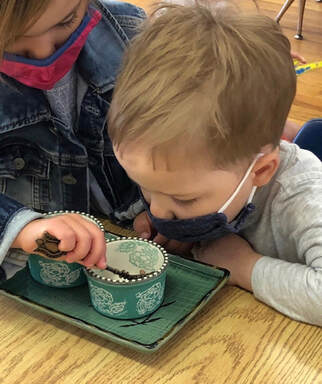
A Montessori classroom is alive and is a fascinating and stimulating child-sized environment: a child-centered community, where all the materials in all the areas are arranged invitingly, on low, open shelves.

The children have free access to these materials and may explore, repeat, practice, refine and spend as much time with these activities as they need to, or for as long as the materials hold their interest.

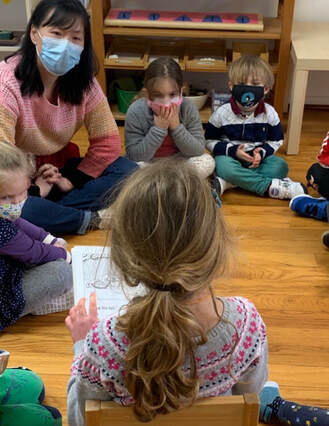
All Montessori classrooms will have an age mix from 2 1/2 years of age to 6 years of age. In this multi- age setting, children learn from each other and they learn because of each other.

The younger children will learn from observing the older children and the older children, in turn, have the opportunity of reinforcing their knowledge by sharing it with the younger children. They also learn to interact with children of different ages.

The sense of community/family amongst the children in the classroom is magnificent to see. The sense of belonging, responsibility, grace, courtesy and generosity of spirit is something that is quite remarkable in the casa classroom.

The successful functioning of the Montessori classroom and the positive and unique learning experience is dependant on the age mix in the classroom and the fact that the children learn at their own pace, in a non-competitive atmosphere.

There is a non-competitive atmosphere because the children work individually with the materials. Each child relates only to their own  achievements and  their progress is not compared to the progress or achievements of others.  They are able to gain confidence in the mastery of their own skills at their own pace, without interference or judgment.

The staff student ratio is 1:8  - as outlined by the Ministry of Education.

Each class will have an AMI trained Montessori teacher, an assistant and a French teacher.
Picture
Picture
Picture

Montessori For Children

The Role of the Teacher in the Classroom

The Montessori teacher is often referred to as a directress, as her role differs considerably from that of a traditional teacher.

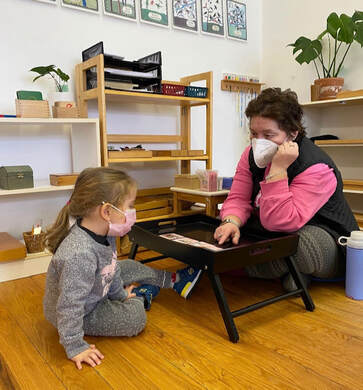
She acts as a “go between” between the child and the materials and presents/demonstrates the correct use of each of the material to each child – allowing each child to teach themselves through their own activities and at their own pace. 

She will observe closely and carefully and take note of the ability and progress of each child in all of the areas and will keep detailed, daily records.

She will present new and challenging activities to children ready to move on and will empower and support those more hesitant children.

She will hold back from correcting or interfering with children who have made mistakes, but instead encourage them to stay with the activity so that they may self-discover through the self-correcting qualities of the materials.

The Montessori directress creates a sense of welcoming and calm in the classroom, a place where exploration, freedom and independence is encouraged. The directress will present the materials to the children in such a way that they are intrigued and filled with excitement to become engaged and explore.
​

‘If the idea of the universe is presented to the child in the right way, it will do more for him than just arouse his interest, for it will create in him admiration and wonder, a feeling loftier than any interest and more satisfying.’
Maria Montessori
Picture
Picture
Picture

Montessori For Children

Practical Life
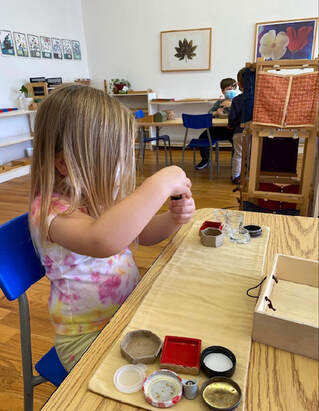
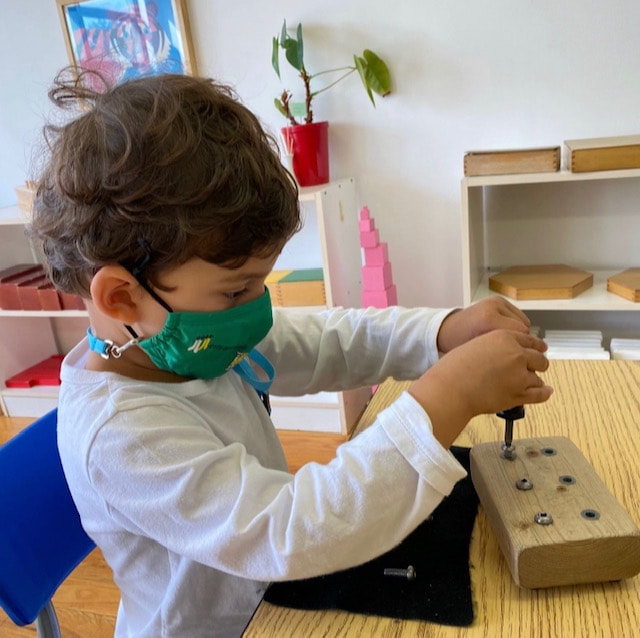
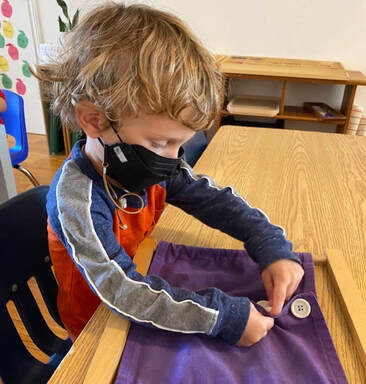
The practical life activities include all of those activities that a child will see around them. By refining these activities, children will become better equipped to functioning independently. These activities would include pouring, polishing, sweeping, cutting, buckling, lacing, tying bows etc.

Although these activities may appear to be simple and commonplace, they are not only creating independence in children, but are the foundation of all that is to follow and are very important in the Montessori program. Each of these activities will require focus, concentration, co-ordination and control of movement - all required in math or language activities to follow.
​

“The exercises of Practical life are formative activities, a work of adaptation to the environment, Such adaptation to the environment and efficient functioning therein is the very essence of useful education.”
Maria Montessori
Picture
Picture
Picture

Montessori For Children

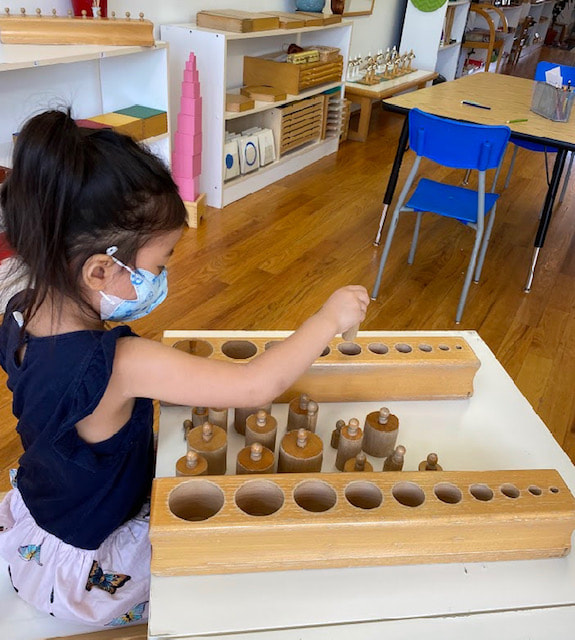
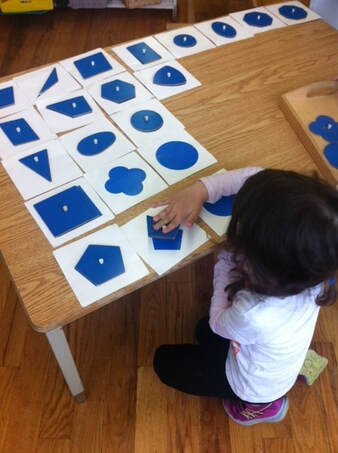
Sensorial
Through exploration with the sensorial materials the children are able to refine all senses: discrimination of color, size shape, dimension, taste, touch, sound. Many of the sensorial excercises are indirect preparation for academic learning. 

Learning new vocabulary in the sensorial area is an important part of these activities. Children love learning new, big words, such as rectangular prism or isosceles triangle. It is much easier for them to learn what a cube or a triangular prism is when they can hold it in their hands, as opposed to having to learn it in abstract form. They will have this knowledge, based on this hands-on, concrete impression-that will give them solid preparation for later mathematical activities.
​

“The senses, being the explorers of the world, open the way to knowledge. .it is exactly in the repetition of  the exercises that the education of the senses exists: not that the child should know colors, forms or quantities, but that he refine his senses through and exercise of attention, comparison and judgment." 
Maria Montessori
Picture
Picture
Picture

Montessori For Children

Language
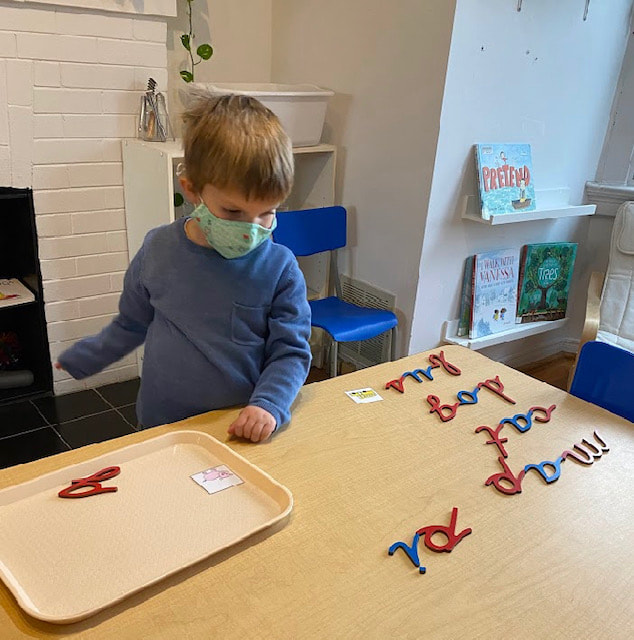
According to Maria Montessori, the sensitive period for language is around age 2-3. Children are most likely to pick up language with great ease and interest during these years. 

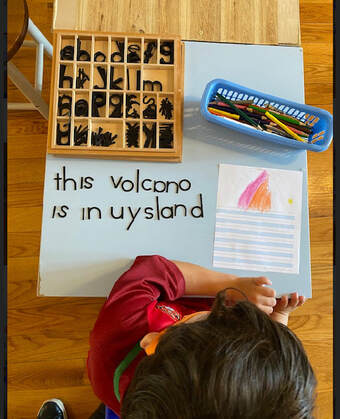
The Montessori environment is filled with exciting, large words so that children can enrich their vocabulary from an early age. They will be introduced to the phonetic alphabet (i.e. the sounds that letters make rather than the names that the letters have). 

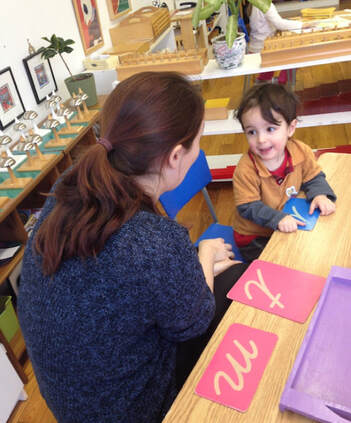
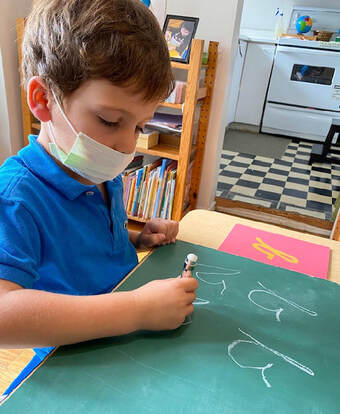
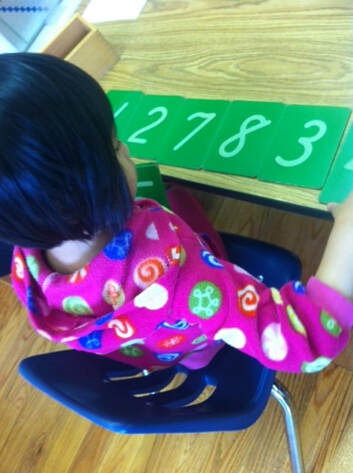
Their first introduction will be with the sandpaper letters where they will hear the sound of a letter, feel the formation of the letter by tracing the sandpaper form and commit to memory the sound that the letter makes, how it is formed and what it looks like. Reading and writing will follow and all of the indirect preparation in the practical life and sensorial areas will set the children up for success.
Picture
Picture
Picture

Montessori For Children

Math
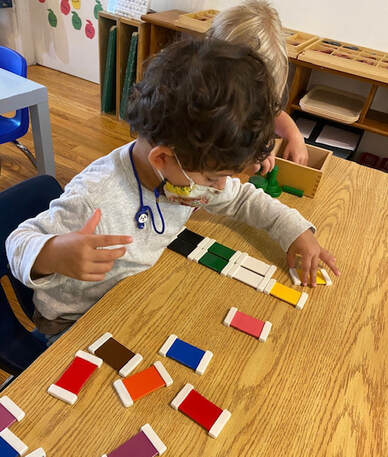
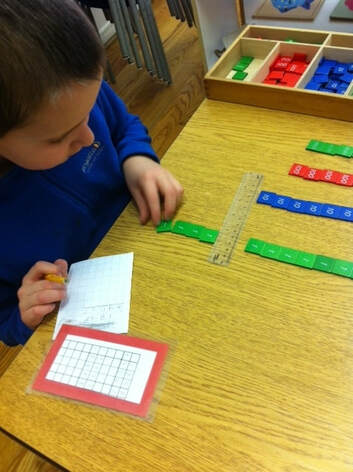
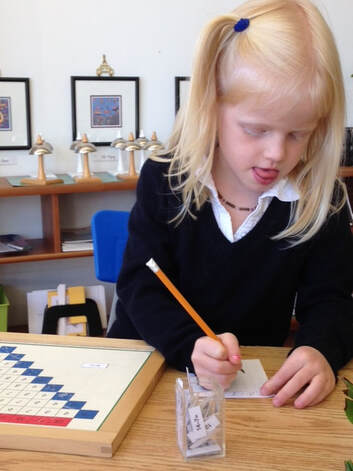
The child has a mathematical mind based on order. Children's tendencies to classify things by size, shape and color is their way of internalizing concepts around them. The math materials help the child classify concepts and make it possible for the child to enter further into what he perceives, with greater detail and to perceive with awareness. 

The math materials that the children are first introduced to are concrete materials requiring much hands-on manipulation. Once these concepts have been explored, experienced and internalized, more complex, abstract activities are introduced. Children will not only be able to recognize the symbol for the number 10 or 1000, but will also be able to hold the corresponding quantities in their hands.

The children do many activities with these materials combining and making larger quantities (addition), taking some away (subtraction), and sharing out equal quantities (division). This hands-on experience and introduction to math makes it possible to true understanding of math and mathematical concepts from the very beginning.
​

"We especially need imagination in science. It is not all mathematics, nor all logic, but it is somewhat beauty and poetry"
Maria Montessori
Picture
Picture
Picture

Montessori For Children

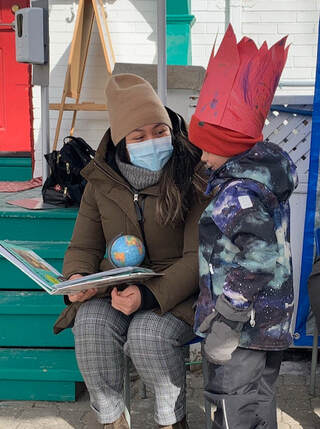
Culture
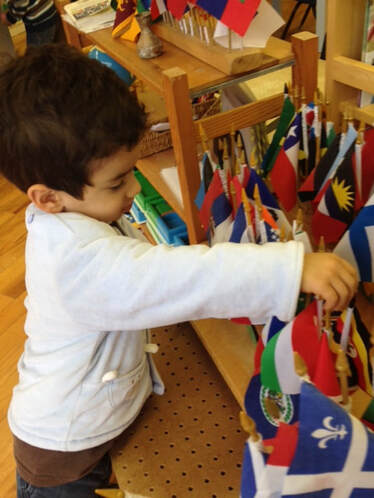
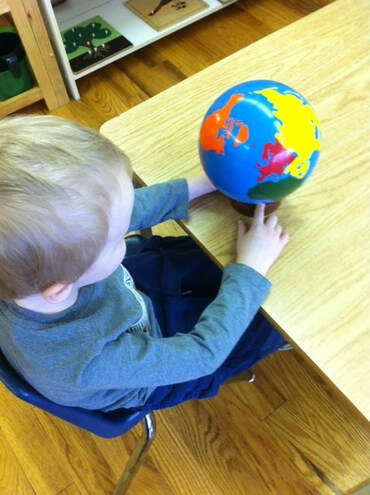
Children love learning about the world around them. The geography, botany and music areas enable the children to learn about the world that they live in: the different continents, countries, flags, people, cultures, music, foods, animals, flowers and land and water forms that make up this wonderful world we live in. 

We celebrate all cultural holidays and Holy Days so that children can be exposed to and learn more about the rich traditions and cultures in our multi-cultural society.
Picture
Picture

Montessori For Children

French
The children will be introduced to the French language as they enter the program. Our French teacher is from France and speaks to the children in French at all times. She has been with the school for 20 years and has created a fun and exciting way to introduce the children to French. 
 Lessons are given daily - one on one and in a group setting. The children will begin by learning new vocabulary, adjectives, verbs...finally progressing to the formation of phrases and sentences.
 
Their acquisition of French is facilitated by the vibrant French music program, where they pick up the French songs with ease and are able to perform them twice a year at our concerts.
Picture
Picture


Montessori For Children
25 Alvin Ave
Toronto, Ontario
M4T 2A7
​(416) 927-1958


​Home
Curriculum
Admissions
Testimonials
Contact

Montessori for Children @ 2026 All Rights Reserved
  • Home
  • Curriculum
  • Admissions
  • Testimonials
  • Contact